Ansys Powered Simulation gives you real-time feedback on your design decisions as you make them. This fast, easy-to-use tool is fully integrated into the 3D CAD modelling environment. Now you can iterate more quickly and generate more options, and design with greater confidence. Each time you make a change, it is analysed in seconds.
That is not just convenience and speed, it’s design guidance as a normal part of your workflow. No need to simplify the geometry, create a mesh, or move between windows. Fluid Flow Simulation to Creo Simulation Live Plus has also been introduced, built specifically for designers, giving real-time fluid flow, thermal, structural, and model simulation capabilities directly integrating with the Creo environment.
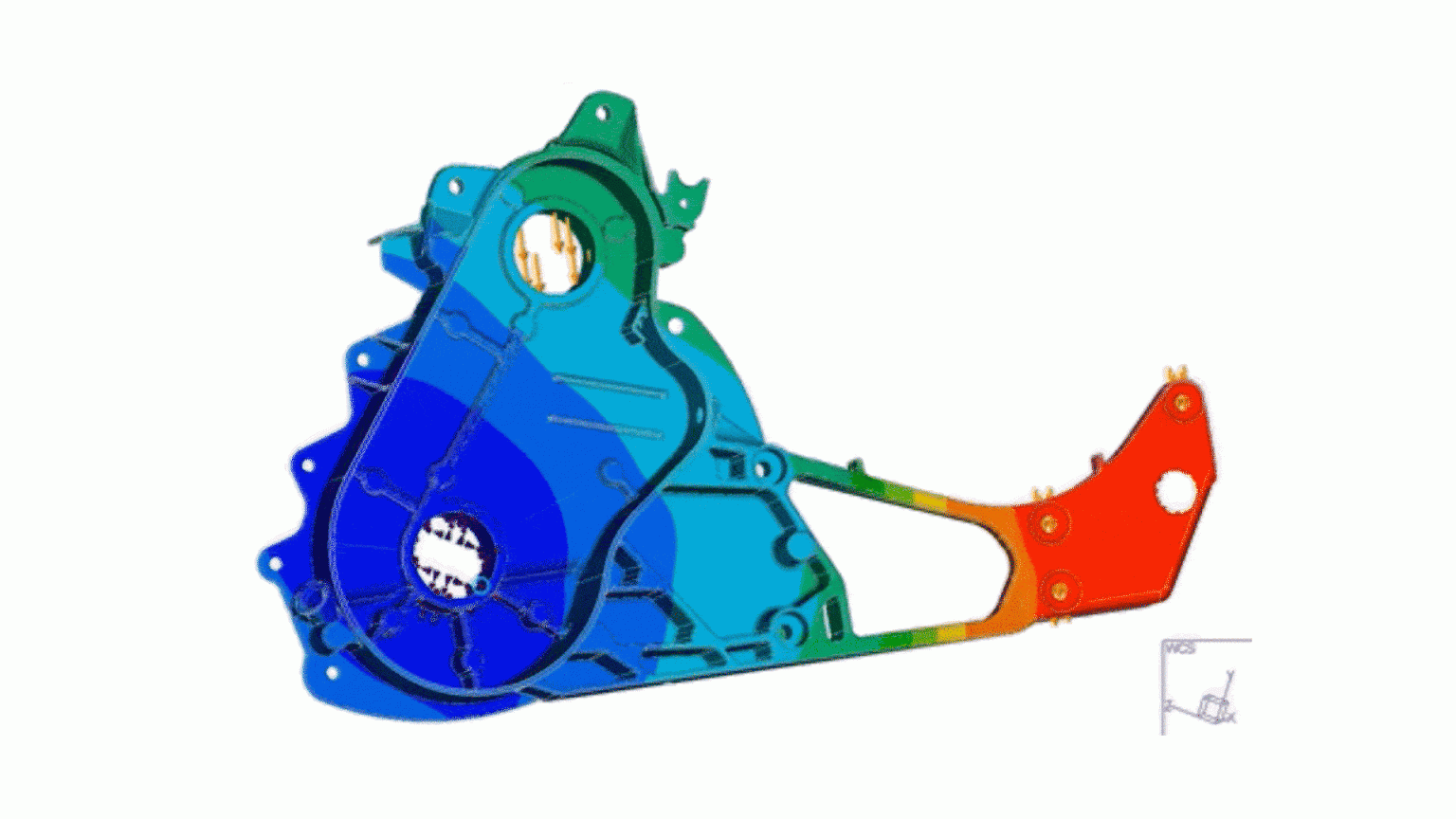
- Rapidly define and perform linear analysis for parts and assemblies
- Real-time: Instantaneous simulation results for parts and assemblies directly in the modelling environment
- Reduce the wait times associated with traditional simulation tools.
- Save both time and cost for high-end analysis whilst also eliminating bottlenecks
- Runs seamlessly in the modelling environment of Creo Parametric for both parts and assemblies
- Automatic meshing algorithm removing the need to manually mesh the model
- Confidence: Powered by ANSYS technology.
- Automatically result in convergence instantaneously without the need to simplify the model
- A new Live Simulation tab that will define the setup details for Creo Simulation Live
- A new Simulation Tree will be available listing all the defined simulations created for the model
- Create multiple simulations per model which will be saved to the model
- Only one simulation can be active at a time and will not influence other simulations and you can toggle between simulations from the Simulation Tree.
- Interactive: Analysis updates dynamically as users edit or create features.
- Ease of use: Run your first simulation in minutes. No need for geometry preparation, meshing or waiting for results.
- Discover problems earlier in the design process when they are easier and less expensive to fix.
- Produce products that more quickly meet functional requirements and explore more design alternatives faster.